
Should a Small Business Choose WordPress or a Custom Website?
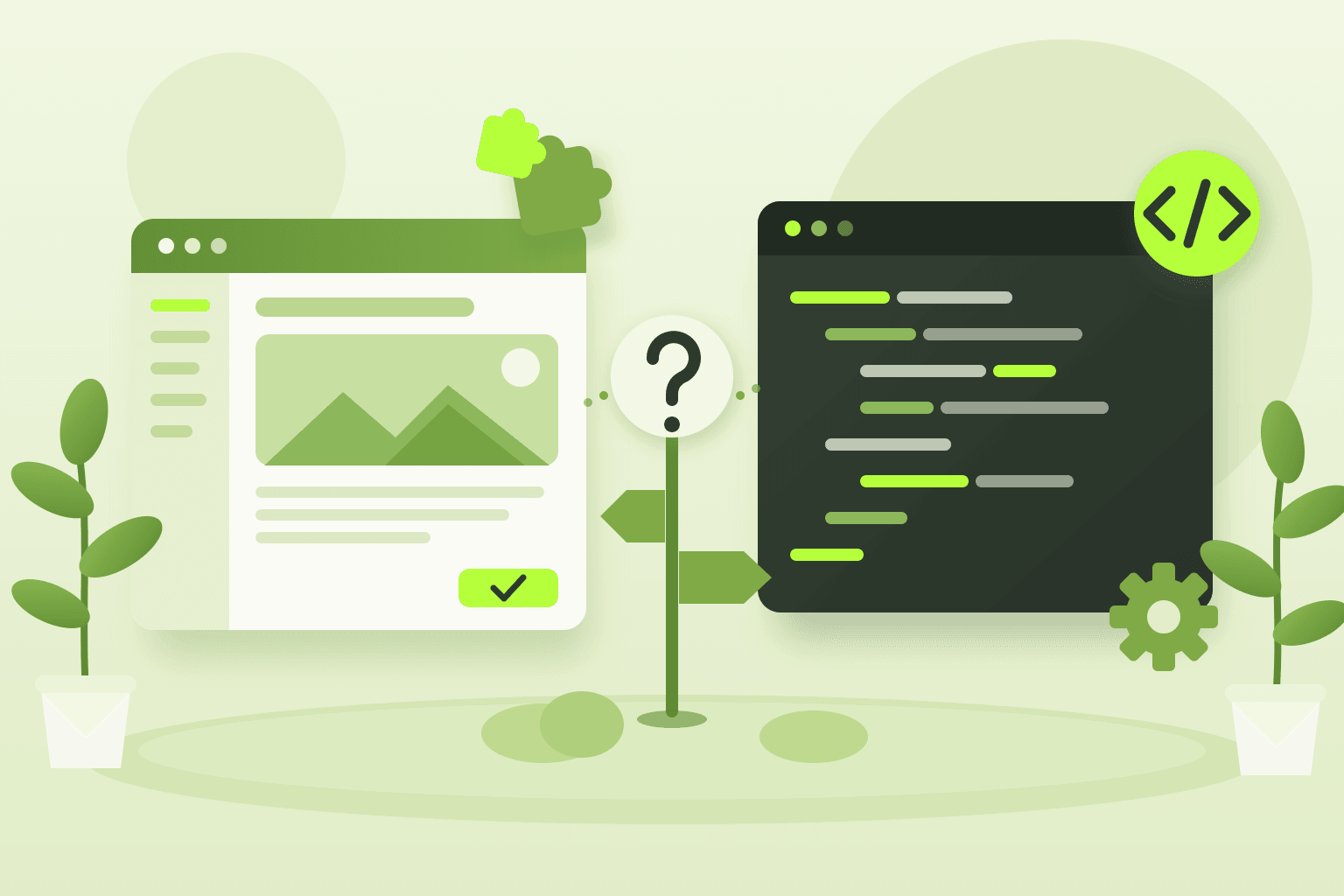
Most small businesses will find WordPress as the best option for a website as it will be mainly informative, publishing content and gathering inquiries. A custom website will be the best option if it requires specialist functionality such as a booking engine, customer portal or bespoke logic for pricing.
WordPress vs Custom Website
A content management system. Installed by a developer with a theme and plugins added. Managed by your team in the admin panel. A custom website will be developed using code specific to your project, using a framework such as Next.js. May or may not have a content editor.
Note that 'custom' can be a bit of a generic term. A WordPress website with a bespoke theme is still a WordPress site with a content management system. This article will refer to a non-WordPress site as a custom website.
- WordPress - If your site will be mainly informational with pages and articles. You'll need your team to regularly update content. Budget is tight.
- Custom - If there is any product or process involved that can't be easily managed using plugins.
- Custom - If there are performance or security issues with a plugin that could put your revenue at risk but you can afford to fund ongoing development.
- WordPress - If you want the flexibility to swap developers.
Why WordPress Is the Sensible Choice
According to W3Techs, 39.5% of all websites are WordPress powered, with 58.2% of known CMS websites. This has dropped from its peak, but for a small business there are many developers who will know how to manage it.
WordPress is great for the main functions that most business websites will need. Your team can add a new blog post or update a new service page without having to touch any code. Forms, SEO, redirections and multi-language can all be done using existing plugins.
Costs are often significantly cheaper. Brochure websites will generally be between $2,000-$10,000. Whilst custom business websites can be $10,000-$50,000+. These are just guidelines for planning. Prices vary between countries but it is easy to see that using a WordPress site will be much cheaper for a site with an informative purpose.
Where WordPress Can Cause Issues
Issues can creep up with WordPress. Starting with a clean site, adding a few plugins for a popup, form etc. After a few years you won't know which plugins are safe to remove and every update becomes a risk.
Security needs to be considered. Patchstack has released a report on WordPress security in 2026. It states that 11,334 new vulnerabilities were discovered in the WordPress ecosystem in 2025. Of this 91% were in plugins, 9% in themes and only 6 in the core WordPress. 46% did not get a timely fix from a developer. This report is from a company who sell WordPress security so take this into consideration but it does show that the more plugins you add the more third-party code you have to be cautious of.
This doesn't mean WordPress isn't a good option. As long as you keep the number of plugins low and have a maintenance plan it can be kept quick and easy to manage. If your site has become messy it may be possible to tidy up and keep it running efficiently.
When a Custom Website Is Worth It
A custom website will be worth the cost if it is an integral part of your business. Describe what the site needs to do without mentioning any technology, and the answer usually points you to the right option. If you say "Show our services and collect enquiries" then a WordPress site is right. If you say "Let approved trade customers see their negotiated prices and reorder from past invoices" then a custom site is needed.
- Customers sign in to manage their accounts / documents / orders.
- Must integrate closely with your CRM, ERP or internal systems.
- Quotes or pricing are based on rules that vary between customers, volumes and regions.
- Site speed or interaction has a direct impact on your revenue and you can pay to keep it ahead.
- You have tried to use plugins to solve the issue but it is costing more than it is saving.
A custom site will still need maintaining. Although there are fewer plugins available to the public to attack, the frameworks and packages will need updating. You'll also rely on developers to make changes that could be done by a WordPress editor. Plan to budget for this. A custom site with no budget for development after launch will generally not age well.
The Middle Ground
You don't always have to choose between the two. You could have a marketing site on WordPress and have a custom customer portal on a subdomain. This way your content team can still use their editor whilst allowing the complex part of your site to get the engineering it needs.
Comparison
Initial Cost
WordPress will generally be cheaper as there is already a content management system, admin panel and lots of features. Custom will cost more as you are paying for all the decisions and coding from scratch.
Ongoing Cost
WordPress will have predictable costs for hosting, licences and updates. According to a 2026 guide by Codeable (who sell WordPress maintenance) maintenance only plans can be between $39-$359 per month. Hosting will also need to be paid for. Custom sites may have less ongoing tasks but generally every change will require a developer.
Content Management
This is the main benefit of WordPress for most small teams. A custom site can do the same by integrating a headless CMS. However this is another system to add to your project and will incur extra costs. If your marketing team are publishing content weekly ensure you have seen a demo of the editor.
SEO
Neither option will improve your SEO. Google have guidance on helpful content. Regardless of which option you choose, if your site is well built it will do well. If it is poorly built it won't.
WordPress will allow non-developers more control over SEO using plugins. Custom will give developers more control over the code.
Speed
A custom site can be very fast as it only includes what is needed for the project. However, a well maintained WordPress site with good hosting, caching and few plugins can hit Google's Core Web Vitals. Ask any providers how they will measure speed on actual pages.
Hiring Someone Else
It will be easier to hire someone else to work on a standard WordPress site. A custom site can only be as transferable as the code and documentation. Ensure you will have ownership of the code and access to the repository. Ask how a new developer would get started.
Four Questions to Ask Yourself
Before asking for quotes write down the answers to these questions. This will make it easier to compare prices between providers.
- What do you need the site to do on launch date? What can be added later? Only add features you can justify now.
- Who will be managing the updates weekly? How technical are they?
- How much will you be spending yearly on the site? (Updates, fixes, changes).
- How much would it cost if the site was down for a day? The higher the number the more thought should go into the architecture of the site.
If you've answered that your site is going to be pages, posts and forms being updated by non-developers with a small budget then go with WordPress. If it is going to be an application with logins, business logic and a budget for dedicated development then go with a custom site. If it is mainly content with one complex feature then look into the middle ground option and price it up.
Examples
These are hypothetical examples. Your details may lead you to a different answer.
Accountancy Firm
They want to showcase their services, remind customers of tax deadlines and gather inquiries. Most of the updates will be done by the office manager. This fits well with WordPress. A custom site would incur extra costs to solve issues they don't have.
Wholesale Supplier
Approved trade buyers log in to see their negotiated pricing and reorder from their history. Orders will go into their stock system. Whilst this could be partially achieved using plugins, the workarounds would affect the part of the site that generates revenue. This should be quoted for a custom site. The middle ground option should also be quoted.
Clinic
Most of the site will be informational. Only the booking has any complexity. Firstly check if there is an existing booking tool that can be integrated with WordPress. If it can't adhere to the clinic's rules then stick with WordPress for the content and only develop the booking feature. Clinics should also consider how patient data will be handled with either option as privacy rules may affect your choice.
Common Mistakes
The most common mistake is assuming you'll need it in the future. If you're planning on having a customer portal 'in the future' then you can start with WordPress and add it when there is demand and a budget. By paying for this flexibility early on you're tying up money that could have been spent on content and marketing.
The opposite mistake is trying to force WordPress into an application. If your requirements are continually increasing with "a plugin plus some custom code" then price up how much it will cost to create these workarounds. It could be close to the price of a custom site and there will be more things to manage.
Be wary of advice from a provider who only offer one option. Ask them to describe a project they would advise the other option for. If they can't think of any then their advice may be more for what they offer rather than what you need.
Not Sure Which Option Your Project Falls Into?
Tell us what your site will need to do and who will be managing it. We offer both WordPress and web development so we'll let you know which option is right for you. Get in touch.
FAQs
Is WordPress a Good Option for a Professional Business Site?
Yes, for most service based businesses and content sites. How it is built and maintained will determine how professional it looks. Keeping a clean theme, limited plugins and regular updates will make a big difference.
Will a Custom Website Be Better for SEO?
No, not automatically. SEO is determined by the content, relevance, technical performance and links. Both options can be used to help with this. However, if there is a specific issue with performance that a custom site can fix then it may help. But if you have poor content it won't help.
Can I Switch From WordPress to a Custom Website?
Yes. Content can be exported and URLs redirected. Careful planning will be required to ensure your search rankings aren't affected. Often starting with WordPress and switching later is a sensible option if your requirements aren't proven.
Is WordPress Free?
The software itself is free and open source. However there will be costs for hosting, domain and any premium themes, plugins, design, development and maintenance.
Written by
Nexsols Analytics
Crafting Code, Creating Visibility
Ready to Talk About WordPress Development?
If WordPress is the right fit, we'll build a clean, fast site your team can manage without a pile of plugins.
How Much Does a Business Website Cost? A Breakdown by Site Type
Business website cost ranges for 2026 by site type: DIY, brochure, custom, and online store. See what drives the price and what to budget after launch.
Read Article
Should a Small Business Run an SEO Audit or a Full Website Redesign First?
Should you run an SEO audit or a full redesign first? Real cost ranges, recovery-time data, and a simple way to decide which one your site needs.
Read Article
10 Website Redesign Signs You Shouldn't Ignore (Plus a Free Self-Audit)
10 website redesign signs backed by real benchmarks, like bounce rate and Core Web Vitals, plus a free 5-minute self-audit and when not to redesign.
Read Article
Why Your Website Gets Traffic but Few Enquiries
Traffic climbing while enquiries stay flat usually means wrong-intent keywords, unclear messaging or a weak call to action. Here's how to fix it.
Read Article
What Makes a Business Website Actually Effective?
The elements backed by real usability research that decide whether a website builds trust, guides visitors and drives growth.
Read Article
How to Prepare Your Online Store Before Development
A pre-development checklist for online stores: catalogue readiness, payments, shipping, product content and platform choice, so your build stays on schedule.
Read Article