
How Much Does a Business Website Cost? A Breakdown by Site Type
A business website can cost a few hundred dollars a year on a DIY builder, or $150,000 and up for a custom online store. Professionally built small business sites are commonly quoted between $3,000 and $25,000. The spread is huge because "a website" covers everything from a five-page brochure to a store with its own checkout. What you pay comes down to what the site has to do, how much of it is custom, and who writes the content.
The numbers below come from 2026 pricing guides written by web agencies and hosting companies. They sell what they're pricing, and they disagree with each other, so read the ranges as rough planning figures. They're good for sense-checking a quote. They won't replace one.
Business Website Cost at a Glance
- DIY website builder: roughly $16-$17 per month for entry plans on Wix or Squarespace, and about $50-$500 per year for a small builder-based business site
- Freelancer-built simple site: about $1,000-$5,000
- Brochure or landing-page site: about $2,000-$10,000
- Professionally built small business site: about $3,000-$25,000, depending on the source and the scope
- Custom business or lead-generation site: about $10,000-$50,000 or more
- Online store, starter level: about $500-$5,000 plus monthly platform fees
- Online store, small professional build: about $5,000-$25,000 or more
- Custom growth-stage online store: about $25,000-$150,000 or more
- Custom web application: from $25,000, and often far higher
All figures are in US dollars. Rates elsewhere differ, and a local freelancer won't charge what a US agency does, so use the ranges to compare tiers, not as a quote for your area.
DIY Website Builders: From Roughly $16 a Month
Wix and Squarespace are the usual starting points. You pick a template, add your content and publish. Entry plans cost about $17 and $16 a month respectively, and a small business site on a builder runs an estimated $50-$500 a year once hosting, premium templates and plugins are counted. Hosting and security are included, so there's no separate bill.
The catch is your time. You write the copy, pick the images and build the layout, and the result looks like every other site on that template. SEO controls are basic, which matters if you want customers to find you through search.
DIY suits a new business testing an idea, a sole trader who needs something simple, or a business whose customers don't come through the website. It stops working when you need custom functions, faster pages, or control over how pages are structured for SEO.
Brochure and Service Sites: $2,000-$25,000
A brochure site says what you do and tells visitors how to reach you: a home page, an about page, a few service pages and a contact page. Most consultancies, clinics and trades fall here.
Prices in this tier are all over the place, mostly because of who builds the site and how much of it is custom. Published guides put a simple freelancer-built site at $1,000-$5,000 and brochure or landing-page sites at $2,000-$10,000. A basic professional small business site is quoted at $3,000-$10,000 or more in some guides and $5,000-$25,000 in others. Add a custom design system, more page types, or booking and CRM integrations, and you're looking at $10,000-$50,000 or more.
Replacing an old site adds one more cost: protecting what it already earns. A redesign that changes URLs without redirects can lose search traffic, which is why we suggest an audit first. Google's guidance on hiring an SEO says a great time to bring one in is when you're considering a site redesign, and that the earlier the better. We compare the two routes in Should a Small Business Run an SEO Audit or a Full Website Redesign First?, and our web design and development service scopes new builds and rebuilds the same way.
Online Stores: $500-$150,000
A store costs more because it does more: product pages, a catalogue, search and filters, a cart, payments, shipping rules, tax settings and order emails. If any of those breaks, you lose sales, so all of them have to work.
Platform choice changes how you pay. Shopify Plus is listed at $2,300-$2,500 a month depending on contract length. WooCommerce is free software but needs hosting, which for most stores costs $25-$350 a month, and each paid extension adds $29-$299 a year.
By tier, a starter hosted or DIY store runs about $500-$5,000 or more, plus monthly platform fees. A small professional store, with design help, setup, products and launch testing, runs $5,000-$25,000 or more. A custom growth-stage store costs $25,000-$150,000 or more. B2B, large-catalogue and heavily integrated stores run $75,000-$250,000 or more, and enterprise, headless or fully custom commerce runs $250,000-$500,000 or more.
Custom backend work for payments, inventory, customer accounts and links to other systems is sometimes priced separately. One published breakdown puts it at $10,000-$50,000 or more, depending on complexity.
Preparation changes the price too. Clean product data, finished photos and clear shipping and returns policies save developer hours. Our guide to how to prepare your online store before development covers what to have ready, and our ecommerce development service covers the build.
Custom Web Applications: $25,000 and Up
A custom application is a different category: a customer portal, a booking platform with its own logic, a quoting tool, a marketplace. It's software, priced by how much it does, how many user roles it has and what it connects to.
Published guides say a custom web application starts at $25,000 and can reach $500,000 or more. At that level, expect a discovery phase before any fixed quote. The scope is too open to price from a short brief.
What Drives the Price of a Website
Two sites with the same page count can come back with very different quotes. These are the reasons.
Design is the first lever. A template costs less up front, while custom layouts cost more but can be built around how your customers actually make decisions. Page types matter more than page count: ten similar service pages cost less than ten pages that each need their own layout.
Functionality adds up quickly. Booking, payments, member areas, calculators and integrations with other software each take build and testing time.
Content is the item people forget. Copywriting, photography and video are often left out of quotes, and many price guides leave them out of their figures too. If you don't have finished content, budget for it, or the launch slips while you write it.
SEO and performance are cheaper to plan in than to retrofit. Structured data, fast load times and a sensible page hierarchy are easier to build from the start. If you want to know where an existing site stands first, an SEO audit costs far less than a rebuild.
Last, who builds it. Freelancers, small agencies and large agencies price the same scope differently, with different levels of process and support.
A Practical Rule
Start with what the site must do: bring in enquiries, take orders, or support existing customers. Then price the cheapest build that does that well. Features you don't need add cost and nothing else.
The same goal should drive the design. A site that looks good but doesn't convert is expensive at any price. We look at the difference in What Makes a Business Website Actually Effective and Why Your Website Gets Traffic but Few Enquiries.
Costs After Launch
The launch invoice isn't the whole bill. Recurring costs are small for a simple site, but they don't go away.
- Domain name: about $10-$20 per year
- Hosting: about $5-$15 per month on shared plans for a small site, more for managed or high-traffic hosting
- SSL certificate: usually free through the host, with paid certificates running about $10-$200 per year for specific needs
- Plugins and extensions: $0-$500 per year, depending on the platform and what you use
- Updates, backups and security monitoring: handled by you, or by a maintenance plan
- Content updates and SEO work: ongoing if the site is meant to bring in search traffic
Add the domain and shared hosting rates and a basic brochure site costs roughly $70-$200 a year. Plugins, business email, a maintenance plan or marketing push that up. A site that never gets updated ages fast, and outdated design, slow pages and broken features are common reasons businesses rebuild, as we cover in 10 Website Redesign Signs You Shouldn't Ignore.
Get a Scoped Estimate
Send us a short brief with your goal, the pages you expect, and whether you have content ready. We'll reply with a scoped estimate. Contact us to get started.
How to Get Comparable Quotes
Quotes are hard to compare when every provider assumes something different. Give each one the same written brief and most of that goes away.
- State the goal of the site in one sentence, such as "generate 20 qualified enquiries a month"
- List the pages and features you expect, and mark which are essential
- Say whether you will supply the copy and images or need them produced
- Ask whether the quote covers SEO setup, redirects from the old site, mobile testing and training
- Ask what happens after launch: support period, maintenance options, and who owns the code and accounts
- Ask for a breakdown by phase, not a single total, so you can see where the money goes
Check what a very low quote leaves out before you say yes. Content, SEO setup and post-launch support are the usual gaps. A very high quote should explain what the extra money buys.
Frequently Asked Questions
How Much Should a Small Business Spend on a Website?
Professionally built small business sites are commonly quoted between $3,000 and $25,000, depending on the guide and the scope. A new business testing demand can start lower with a DIY builder, and a business that earns most of its revenue through the site often spends more. Tie the budget to what the site is expected to earn.
Is a Cheap Website Worth It?
Sometimes, if your needs are simple and you accept the limits. A cheap build can cost more later if it has to be rebuilt for performance, SEO or missing features. Think about what the site needs to do over the next two or three years.
Why Do Website Quotes Vary So Much?
Providers price different scopes, different amounts of customisation and different levels of strategy and support. One quote may include copywriting, SEO setup and a maintenance period, while another covers only design and build.
What Is the Difference Between Building and Redesigning a Website?
A new build starts from nothing. A redesign has to keep what the current site does well, including search rankings and working URLs. Small business redesigns commonly run $5,000-$20,000, and an SEO audit beforehand costs a fraction of that and shows what to protect.
Do I Need to Pay Monthly for a Website?
You'll pay for hosting and a domain, billed monthly or yearly depending on the platform. DIY builders bundle hosting into the monthly fee. Maintenance, content updates and SEO are separate and optional, though a site that is never updated can fall behind quickly.
Written by
Nexsols Analytics
Crafting Code, Creating Visibility
Ready to Talk About Web Design & Development?
Planning a new site or a rebuild? Tell us what the website needs to do and we'll scope a build that fits the goal and the budget.

Should a Small Business Choose WordPress or a Custom Website?
WordPress suits most content-led small business sites. A custom build earns its cost when the site must do something WordPress can't. Here's how to decide.
Read Article
Should a Small Business Run an SEO Audit or a Full Website Redesign First?
Should you run an SEO audit or a full redesign first? Real cost ranges, recovery-time data, and a simple way to decide which one your site needs.
Read Article
10 Website Redesign Signs You Shouldn't Ignore (Plus a Free Self-Audit)
10 website redesign signs backed by real benchmarks, like bounce rate and Core Web Vitals, plus a free 5-minute self-audit and when not to redesign.
Read Article
Why Your Website Gets Traffic but Few Enquiries
Traffic climbing while enquiries stay flat usually means wrong-intent keywords, unclear messaging or a weak call to action. Here's how to fix it.
Read Article
What Makes a Business Website Actually Effective?
The elements backed by real usability research that decide whether a website builds trust, guides visitors and drives growth.
Read Article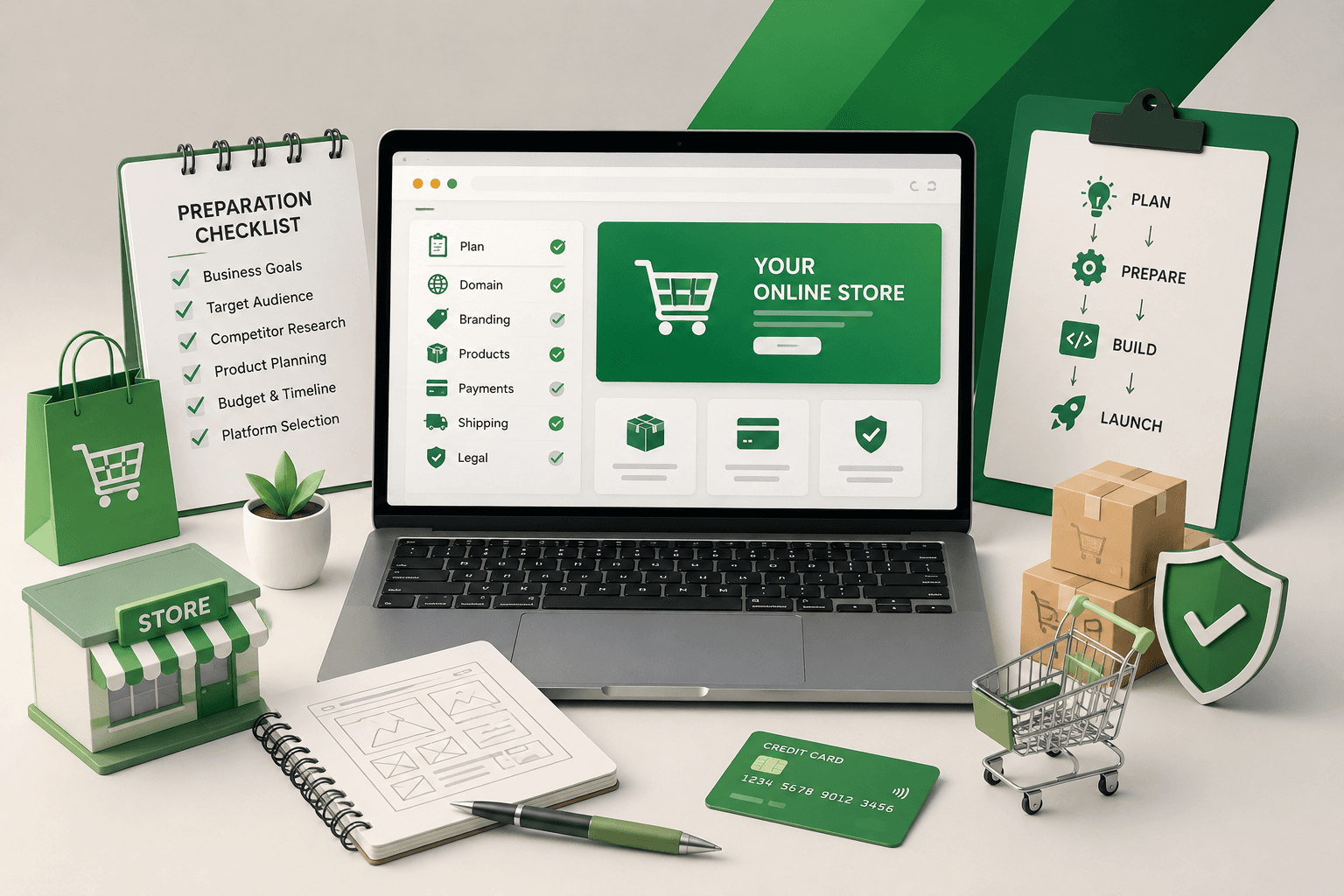
How to Prepare Your Online Store Before Development
A pre-development checklist for online stores: catalogue readiness, payments, shipping, product content and platform choice, so your build stays on schedule.
Read Article